Introduction
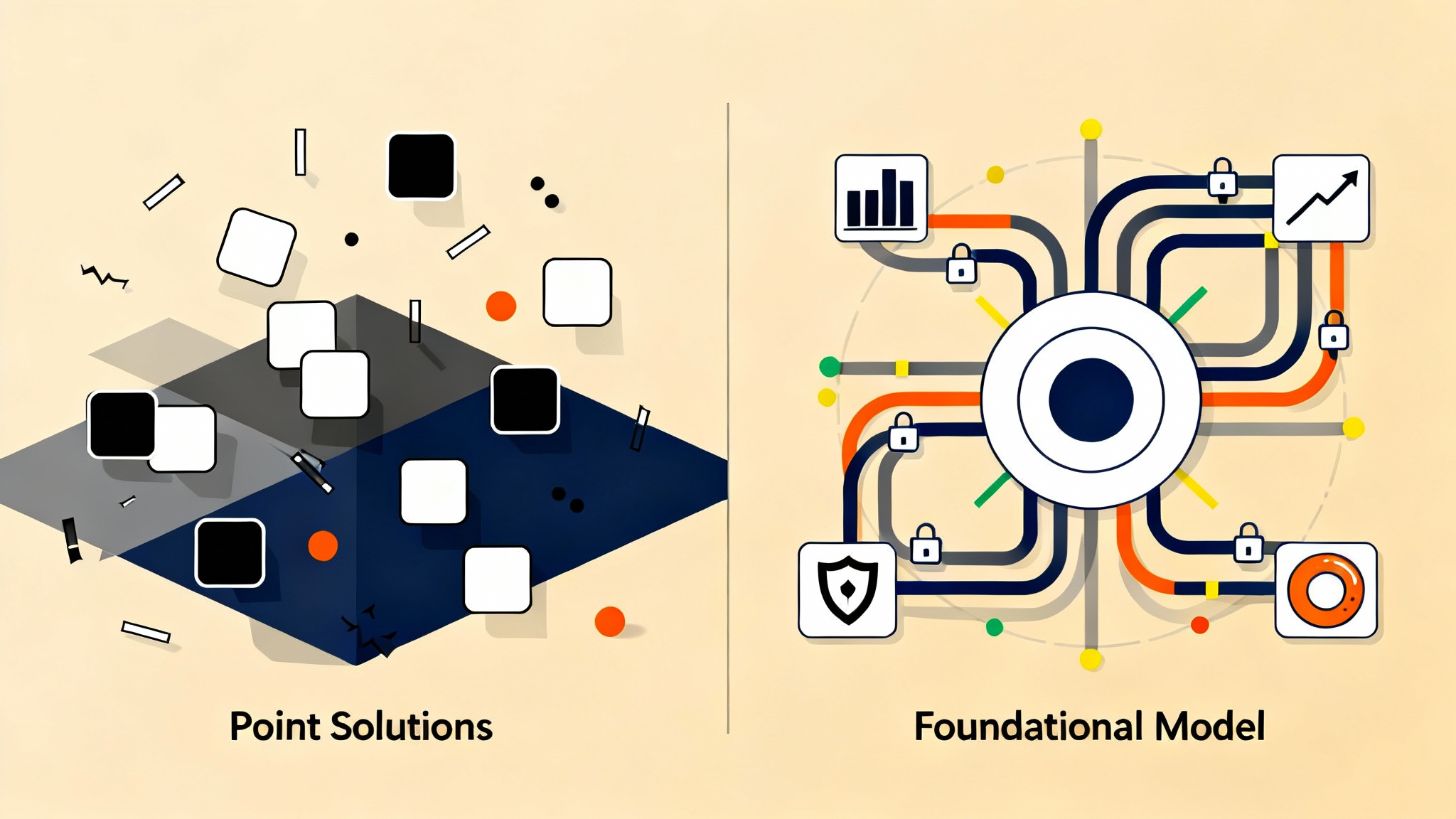
If you’re leading demand generation or marketing operations, odds are you’re seeing pressure—from leadership, your board, or even your peers—to “do something with AI.” It sounds exciting at first, but the choices can send your stack in two very different directions: a patchwork of fast-moving point solutions, or foundational models tightly coupled to your strategy. The stakes are high. Move too quickly without a plan, and you risk new silos, wasted spend, and uncertain ROI. The core question is deceptively simple: When it comes to AI, do you buy quick point solutions or build around foundational models?
Below, you’ll find the practical trade-offs—what works for a fast quarter’s win, what sets you up for sustainable, revenue-driving impact, and how to define a path that fits your business goals, not just this year’s AI headlines.
Point Solutions: Fast Wins and Hidden Costs
Point solutions flood the market for a reason: they solve a single task—like subject-line optimization, basic chat automation, or campaign asset generation—right out of the box. If you need a quick needle-mover, the appeal is obvious.
Pros:
- Rapid deployment: Get results in weeks, not quarters.
- Targeted value: Excellent for high-frequency, repetitive tasks that need automating now.
- Lower upfront commitment: Minimal investment or IT lift to get started.
Cons:
- Stack sprawl: Each point tool often becomes a silo—contributing to fragmented data, disconnected workflows, and redundant processes.
- Vendor lock-in: Your flexibility is limited by the tool’s roadmap—customization or integration can be slow or costly.
- Data and privacy risks: Each new solution introduces a new surface area for compliance headaches and limits your control over IP.
Point solutions work best when speed is critical and the problem is well-defined and narrow. Expand without an AI adoption strategy, though, and you’ll face runaway licensing costs, operational friction, and a tangle of disconnected analytics.
Building on Foundational AI Models: Flexibility and Enterprise Value
Building around an AI model (like OpenAI or Anthropic) looks different—it’s about laying down an adaptable core that powers multiple workflows across campaigns, content, and forecasting. If you envision AI as integral to your marketing engine, this approach compounds your investment.
Pros:
- End-to-end control: Your data, your rules. Define workflows that evolve as your business does.
- Maximum flexibility and customization: Fine-tune models to match your customers, markets, or brand.
- Strategic alignment: Integrate AI directly with demand gen, sales ops, and content; tie every outcome back to KPIs that matter.
- Continuous improvement: Enable AI agents to learn from new data and feedback over time.
Cons:
- Higher upfront investment: It takes more time, specialized talent, and clear planning to get started.
- Needs vision and buy-in: Success relies on clarity—what are you optimizing, and how will you measure progress?
- Requires strong governance: Avoiding drift, mistakes, or misuse takes clear standards and regular oversight.
Foundational models reward those who start with business outcomes—unlocking broad value, not just isolated efficiency. Research consistently shows that high-performers achieve better ROI and agility by anchoring AI to clear governance and a strategic roadmap[Gartner 2024][McKinsey 2024].
What Matters Most: Making AI a Growth Asset
No two businesses—or teams—are the same. The most important first step isn’t about picking tools or models, but defining what success looks like. Start by focusing on your real needs: data quality, forecasting precision, campaign automation, or predictable pipeline.
- Tie AI to your strategy: Treat it as part of your growth engine, not an afterthought. What KPIs will you move?
- Design for evolvability: The right foundation lets you say “yes” to future integrations, new channels, and emerging trends—without redoing the plumbing.
- Invest for the long run: Fast wins are great, but the real advantage goes to teams who create a platform for compound learning and competitive differentiation.
AI should be a long-term lever, not just a short-term sprint. When you treat foundational models as your competitive moat, every improvement multiplies across teams, campaigns, and customers.
Fullstride’s Point of View
At Fullstride, we take a model-first stance—building your AI stack directly on robust, adaptable models, fine-tuned to your proprietary data. We believe in agentic workflows with a human-in-the-loop, giving you oversight and scalability. With our approach, you get flexibility, privacy, and ownership—never locked into a vendor’s toolset.
Everything we build connects through our business model blueprint and RevOps foundation. That means AI serves your growth agenda, aligns with revenue goals, and never becomes just another disconnected app. You maintain control—of data, processes, and future direction.
Key Takeaways & Action Steps
If you’re choosing between point tools and foundational models, here’s your action plan:
- Start with business outcomes. Map the KPIs that matter—pipeline velocity, CAC efficiency, content throughput.
- Pilot fast, but govern tightly. Quick wins belong in bounded domains—always with ROI benchmarks and a sunset plan.
- Build for interoperability. Ensure data, workflows, and reporting can move across tools and teams.
- Phase your investment. Sequence quick wins alongside foundational bets that mature into cross-functional value.
- Centralize oversight. Create a governance program so models and vendors align with compliance, brand, and data standards.
Before you pick any solution, step back and define your AI adoption strategy. The rewards are real—but they go to growth leaders who think beyond today’s hype and lay down a platform their business can trust and scale.
Conclusion
AI Model vs. Point Solutions isn’t just about technology—it’s about the future shape of your growth machine. Quick tools offer rapid impact, but real, sustainable advantage comes when your AI investment is strategic, interconnected, and built for scale.
Define your business needs, demand strong governance, and align your AI adoption with true growth outcomes. The right choice now opens up new possibilities and positions you to win—this quarter and beyond.
Ready to put a real AI strategy in place? Let’s map your KPIs and build a roadmap that compounds value. Schedule a RevOps-driven AI audit with Fullstride today.